
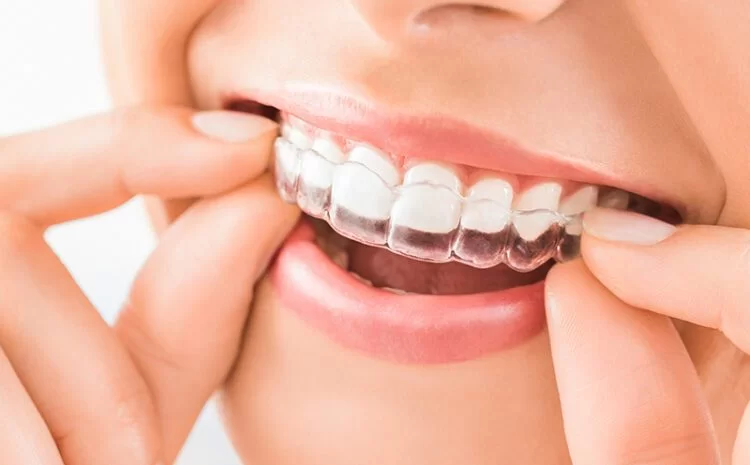
What Are Clear Aligners?
Clear aligners or invisible braces are plastic trays designed to fit snugly over your teeth for gentle adjustment into their final position. Quite unique from metal braces, they are wire and bracket-free and can be removed by the wearer for eating, flossing, and brushing. Invisalign, Clear Correct, Whistle, Illusion Aligners, and SDalign, among others, are some of these brands mostly used in India, as well as internationally.
Clear aligners for teeth are modern approaches to orthodontic treatment of teeth—made using 3D digital scans and computer‑aided treatment planning—which permit a practitioner (dentist or orthodontist) to prepare a virtual treatment plan that demonstrates teeth movement at each stage. They are made of medical‑grade, BPA‑free plastic, facilitating optimum aesthetics and biocompatibility, ensuring their application can be suitable for adult people, working professionals, and students seeking a more subtle improvement in their smile. Learn more about dental implants gurgaon and how they can restore your smile in Gurgaon.
How Do Clear Aligners Work Step-by-Step?
For clear aligner therapy, everything starts off with a systematically guided procedure of digital origin that ensures predictable movements of teeth. Here’s a simple step-by-step breakdown of the treatment process.
- Diagnosis and digital scan – Your dentist takes intraoral scans, X‑rays, and photos to assess your teeth, gums, jaw alignment, and bite.
- Custom treatment plan – There is a simulation in 3D for your teeth movement day by day and total alignment.
- Aligner fabrication – A lab manufactures a series of clear trays, each slightly different from the previous one.
- Wear schedule – Usually, an individual wears one set for 1–2 weeks continuously, removed for eating, brushing, and occasionally ceremonial occasions, keeping them for 20-22 hours each day.
- Progress reviews – Regular check‑ups let your dentist monitor movement and adjust the plan if required.
- Retention phase – After treatments are characterized by wearing retainers, usually clear ones, to prevent relapse and maintain your new smile. Not all implants take months. Find out who can get same day dental implant treatment.
Benefits of Clear Aligners
Clear aligners offer several advantages over traditional braces, especially for lifestyle‑oriented patients:
-
Discreet appearance – Nearly invisible, making them ideal for professionals, students, and public‑facing roles.
-
Removable design – You can take them out to eat, brush, and floss, which helps maintain oral hygiene.
-
Comfortable fit – No metal brackets or wires mean fewer mouth sores and less discomfort.
-
Less frequent visits – Maintenance appointments are often shorter and less frequent than traditional braces.
-
Better hygiene – Removability allows proper brushing and flossing, reducing plaque buildup and gum disease risk.
Side Effects of Clear Aligners
While clear aligners are generally safe, some patients experience temporary side effects:
-
Mild discomfort or pressure – Especially when starting a new set, as teeth move into new positions.
-
Speech changes – A slight lisp or “clicking” sound may occur for a few days until your tongue adapts.
-
Soft‑tissue irritation – Minor rubbing on lips, cheeks, or gums is common early on but improves as tissues adjust.
-
Tooth sensitivity or dry mouth – A temporary hypersensitivity to pressure and temperature can be observed as minimal underflow from trays may evoke mild dryness. Don’t ignore that sharp toothache—learn how a root canal treatment can save your natural tooth.
Difference Between Clear Aligners and Traditional Braces
| Feature | Clear Aligners (Invisible Braces) | Traditional Metal Braces |
| Aesthetics | Nearly invisible, aesthetic look | Very visible metal brackets and wires |
| Comfort | Removable, fewer mouth sores | More frequent irritation, wax is often needed |
| Food Freedom | Can remove for meals, no food restrictions | Many restrictions on sticky, hard foods |
| Hygiene & Cleaning | Easier to brush and floss when trays are out | Harder to clean around brackets and wires |
| Treatment Complexity | Best for mild–moderate misalignment | Handles complex cases and severe misalignment |
| Treatment Duration | Often 6–18 months; varies by case | Often longer, especially for complex cases |
What Is the Cost of Clear Aligners in India?
Clear aligner prices in India vary widely based on:
-
Clinic tier and location (metro vs tier‑2 cities)
-
Brand (Invisalign vs local brands)
-
Case complexity (simple vs moderate vs complex)
-
In‑clinic support (number of follow‑ups, retainers, etc.)
Visit Smilessence at Palam Vihar, Gurgaon, or contact us at 91+ 9811303933. Our team will help you learn everything about our services and charges. Trust our dental specialists, many pateints experinced best treatment and services.
How Long Does Clear Aligner Treatment Take?
Typically, the average duration for treatment is 6 to 18 months, in simple situations wherein the therapy may be completed in 3–6 months, and complex cases wherein the therapy can last beyond 18–24 months. Why pay 5X more abroad? Discover how dental implants in India compare with the USA & UK.
Key factors affecting duration:
-
Severity of misalignment
-
Patient compliance (wearing aligners 20–22 hours/day)
-
Teeth and bone response (genetics and periodontal health)
-
Adherence to the change schedule (not skipping aligner sets)
Daily Life With Clear Aligner Braces: Eating, Speaking, and Cleaning
Adding clear aligners to your daily routine is relatively easy if you follow a few simple habits:
-
Eating: Remove aligners before every meal and dark beverages (coffee, tea, colored soft drinks) and rinse mouth and brush prior to putting the trays back in for stain and decay prevention.
-
Speaking: One may encounter a temporary difficulty in pronouncing the sounds or discomfort for the first few days, and it disappears in a week.
-
Cleaning aligners:
-
Rinse with lukewarm water after removal.
-
Brush gently with a soft‑bristle brush and clear soap (not abrasive toothpaste).
-
Soak occasionally in a dentist‑approved cleaning solution or mild vinegar‑water mix.
-
Store aligners in the case when not in use to avoid loss or damage.
-
Limitations of Clear Aligners Braces
-
Not suitable for all cases – Severe crowding, complex bite issues, or jaw‑related problems may still need braces or surgery.
-
Dependence on compliance – Treatment fails if aligners are not worn enough; patients must be disciplined about timing.
-
Biomechanical constraints – Torque control (resistance to tooth rotation) and anchorage management are more challenging in the removable aligner treatment modality compared to fixed braces. Don’t let gum disease lead to tooth loss.
Tips for Successful Clear Aligner Treatment
To get the best results from your clear aligners:
-
Follow the 20–22 hour rule – Wear aligners almost all day, removing only for meals and oral hygiene.
-
Stick to your change schedule – Do not skip ahead or delay aligner sets without consulting your dentist.
-
Maintain excellent oral hygiene – Brush, floss, and rinse after every meal to protect teeth and gums.
-
Protect your aligners – Avoid chewing gum, eating hard or sticky foods with trays in, and keep them in the case when not in use.
-
Attend follow‑ups regularly – These visits help your dentist adjust attachments, check progress, and avoid complications. Get a confident smile with a solution that’s proven, powerful, and affordable—why metal braces are great choice explained.
Clear Aligners Before and After: What Results Can You Expect?
Most patients who complete their c treatment see visible improvements such as:
-
Closed gaps and spaces between teeth
-
Straightened crooked teeth and rotations
-
More balanced smile and bite
-
Improved lip and facial profile in some cases
“Before and after” photos from clinics across India show transformation in:
-
Crowding to straight alignment
-
Gaps to close contacts
-
Mild bite correction (overbite, underbite, crossbite)
FAQ’s About Clear Aligner
Q1: Are clear aligners the same as invisible braces?
“Clear aligners”—also called “invisible braces”—are so named because they are made up of clear, transparent plastic that blends with your natural teeth to become barely noticeable when worn.
Q2: Can kids and teenagers use clear aligners?
Yes, once their teeth and jaws have fully grown, perhaps. Teens who meet the clinical and compliance criteria may be candidates for clear aligners specifically meant for teens, as recommended by various orthodontists.
Q3: Do I have to change aligners at home?
Yes, you advance to the next set according to your dentist’s schedule (usually every 1–2 weeks). However, your dentist will monitor progress and may pause or adjust the sequence if needed.
Q4: Are clear aligners more comfortable than braces?
Yes. Most patients report that clear aligners feel less painful and irritating than metal braces, especially after the first few days of adjustment.
Q5: Can clear aligners cause gum problems?
Poor hygiene leads to build-ups of plaque and gum inflammation. Properly cleaning own teeth and using aligners, meanwhile, significantly reduces the associated risks.
Q6: Can I get clear aligners for teeth if I already have braces?
Yes. In some cases, orthodontists combine braces for the first phase and then finish with clear aligners for refinement.
Q7: Are clear aligners for teeth more expensive than braces in India?
Yes, most definitely, particularly for well‑known brands like Invisalign. However, the newer local systems and EMIs are allowing for lower costs when it comes to clear aligners.
Q8: How soon will I see results with clear aligners?
Most patients notice subtle changes within 4–6 weeks, with visible improvements becoming evident around 2–3 months of consistent wear.
In This Article
- What Are Clear Aligners?
- How Do Clear Aligners Work Step-by-Step?
- Benefits of Clear Aligners
- Side Effects of Clear Aligners
- Difference Between Clear Aligners and Traditional Braces
- What Is the Cost of Clear Aligners in India?
- How Long Does Clear Aligner Treatment Take?
- Daily Life With Clear Aligner Braces: Eating, Speaking, and Cleaning
- Limitations of Clear Aligners Braces
- Tips for Successful Clear Aligner Treatment
- Clear Aligners Before and After: What Results Can You Expect?
Want to Fix Missing Teeth Today?
Book a clinical assessment. We identify the source and start treatment the same day.
Book at Smilessence The Specialist Dental Centre Gurgaon +91 9811 303 933